


Mixed low-carbon hydrocarbon dry reforming process technology
This project is based on an innovative carbon dioxide dry reforming catalyst. By using a zeolite molecular sieve encapsulation metal particle technology, it overcomes the problems of easy sintering and coking of Ni-based catalysts, breaks through the technological limitations of CO2 dry reforming containing low-carbon alkanes, and can achieve stable long-cycle operation in complex industrial scenarios.
Classification:
Iconic Results
Key words:
Mixed low-carbon hydrocarbon dry reforming process technology
Graphic Details
Technical Introduction
Through a catalytic reaction, a mixture of low-carbon alkanes and CO mainly composed of CH 4 is converted into syngas (H 2 /CO), combining the triple value of greenhouse gas conversion/refinery waste gas resource utilization/clean energy production. This project is based on an innovative carbon dioxide dry reforming catalyst, using zeolite molecular sieve encapsulated metal particle technology to overcome the problems of easy sintering and coking of Ni-based catalysts, breaking through the technical limitations of CO dry reforming containing low-carbon alkanes 2 and enabling stable long-cycle operation in complex industrial scenarios. 2 Problems Solved (Technical Bottlenecks of Traditional Dry Reforming):
Sintering Resistance of Metal Particles Under Dry Reforming Conditions: Sintering of metal particles is the main reason for catalyst deactivation. Dry reforming is often carried out at high temperatures above 750 degrees. How to inhibit the sintering of metal particles represented by Ni is the key to achieving efficient catalysis.
- Coking Problem During Dry Reforming: Dry reforming is a strongly endothermic reaction. After deep cracking of alkanes, strongly adsorbed carbon species are formed, carbonizing on the metal surface, and further catalyzing the formation of coke. How to inhibit the carbonization of metal particles is the key to achieving long-term effective catalysis.
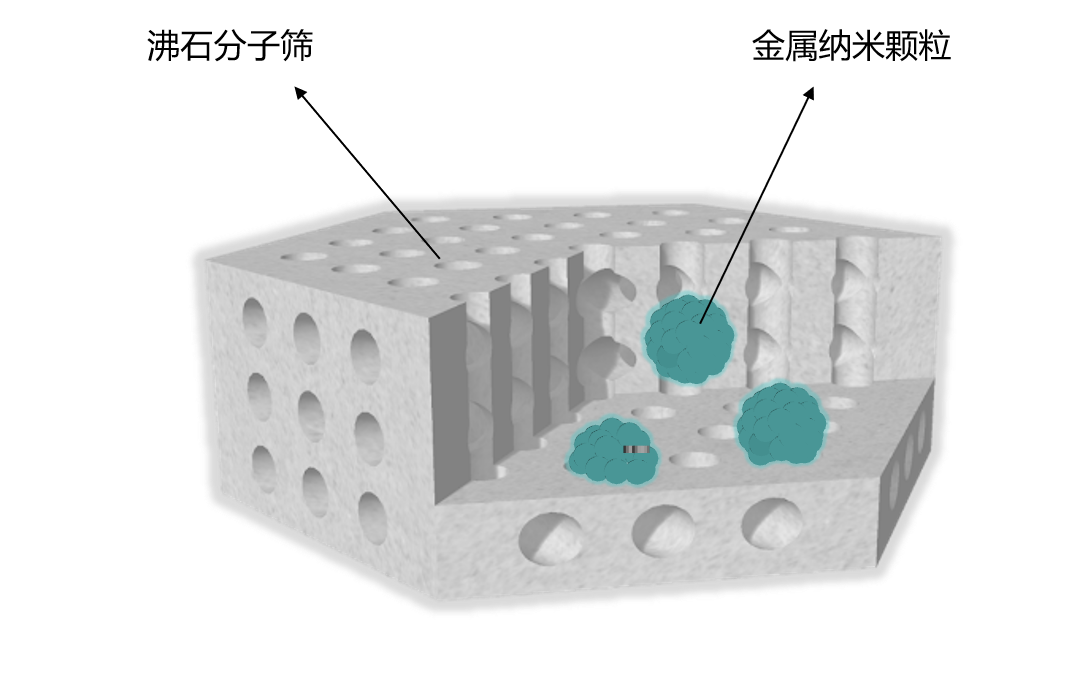
- Principle of Molecular Sieve Structured Stable Catalyst: Different from the traditional catalyst design that mostly uses rare earth additives to stabilize metal nanoparticles, this project proposes the use of zeolite molecular sieves to stabilize metal nanoparticles such as Ni, achieving highly efficient and long-life catalytic processes. The interfacial interaction between the silica skeleton of the molecular sieve and the metal particles and the restriction of microporous channels on coking species are the key to stabilization, and the principle needs further exploration.
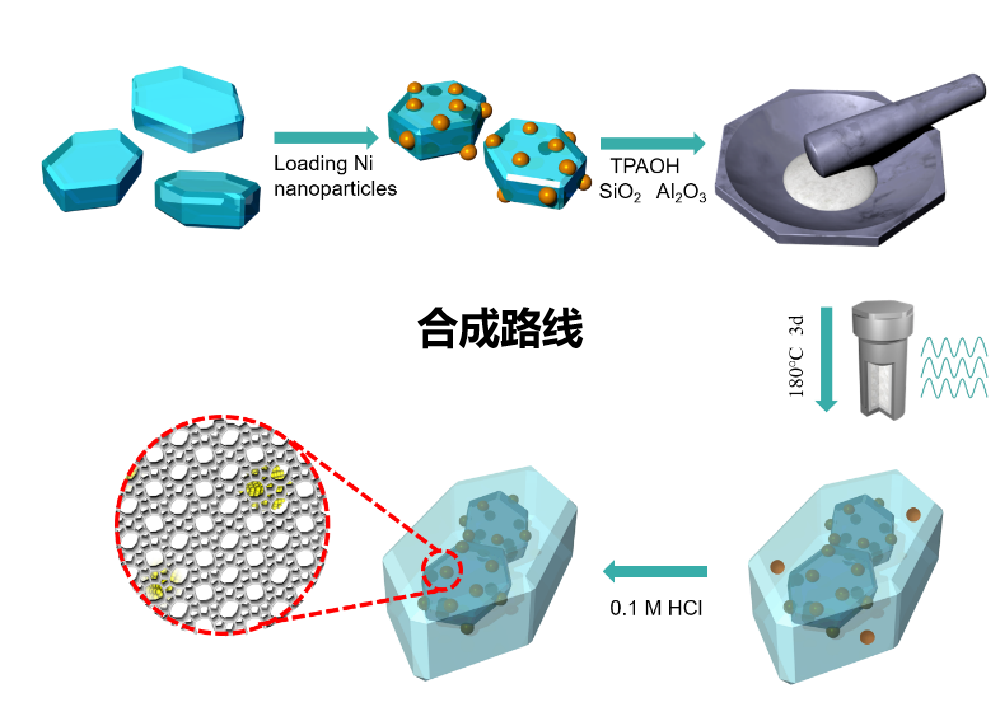
- Technical Route
Key Technologies
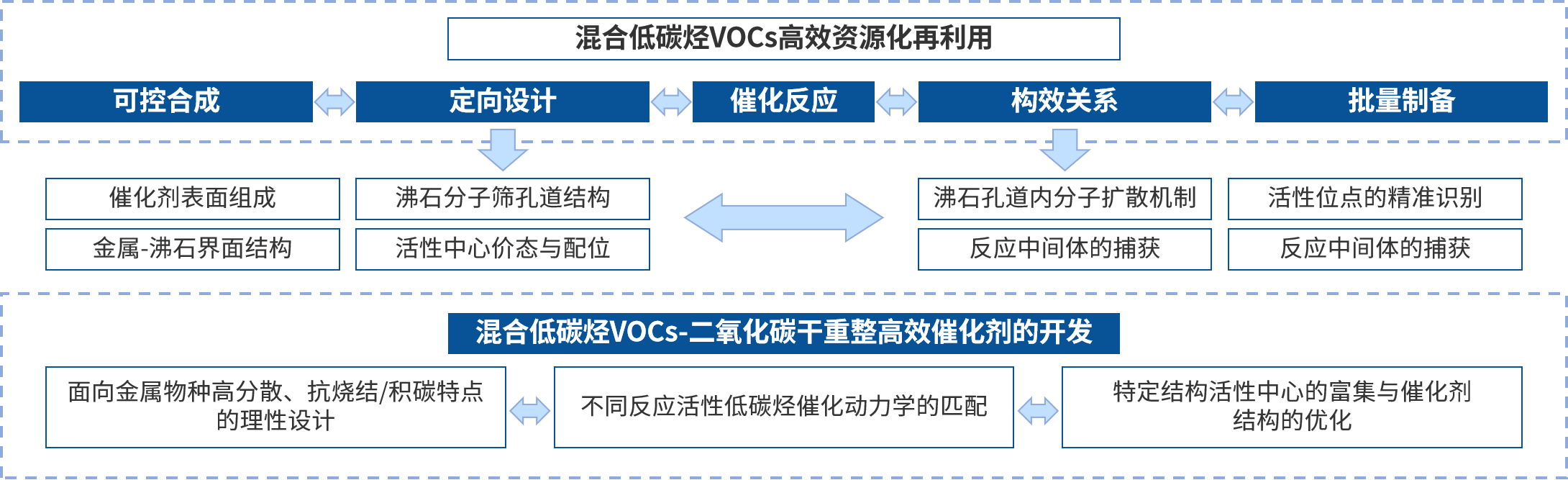
Key Technology 1: Efficient Assembly Technology of Metal and Molecular Sieve Dual-Functional Components
- Based on the research and understanding of the sintering mechanism of metal nanoparticles and the deactivation mechanism of catalytic materials, a core-shell catalytic material CoNi@ZSM-5 with ZSM-5 zeolite encapsulating cobalt-nickel nanoparticles (CoNi NPs) was designed and developed, aiming to solve the problems of metal sintering, coking, and non-regenerability of catalytic materials in traditional dry reforming reactions. CoNi@ZSM-5 achieved excellent sintering resistance and coking resistance in dry reforming reactions, and still maintained a good catalytic material structure after multiple cycles of use.
Key Technology 2: Long-term Technology to Maintain Excellent Stability of Catalyst
- Silicate interface structure and intra-pore hydrogen spillover inhibit coke formation. Based on the research of the mechanism of methane dry reforming reaction and the effect of hydrogen spillover on the reaction process, the pore environment of zeolite molecular sieve is further regulated, and Ni@HZSM-5 catalytic material with enhanced hydrogen spillover effect is designed. Fast diffusion of hydrogen species effectively inhibits the formation of coke.
Key Technology 3: Catalyst Preparation Technology for Strong Heat Transfer Reaction System
- The thermal conductivity of molecular sieves is generally low. For this strongly endothermic reaction, how to achieve efficient reaction after molding requires enhanced heat diffusion. Based on the research on monolithic catalytic materials and bulk supports, combining the zeolite encapsulation strategy and pore regulation strategy, molecular sieve/SiC catalytic materials are designed using the good thermodynamic stability, thermal conductivity, and thermal expansion of silicon carbide.
Preliminary Project Results
New Catalyst: Zeolite Encapsulated Structure
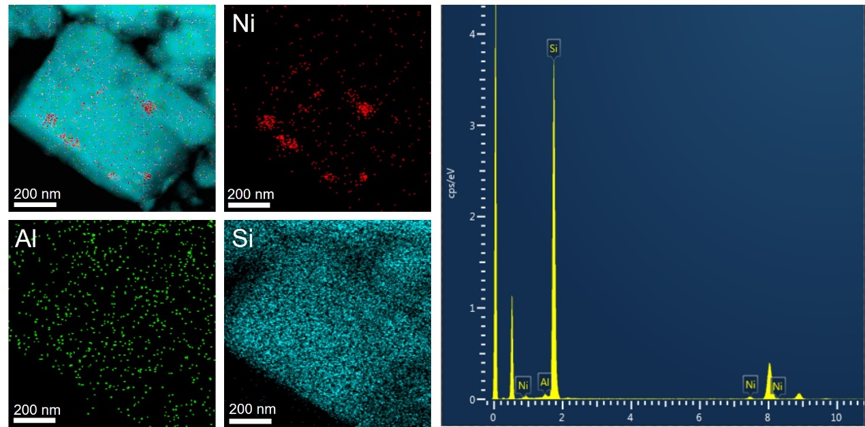
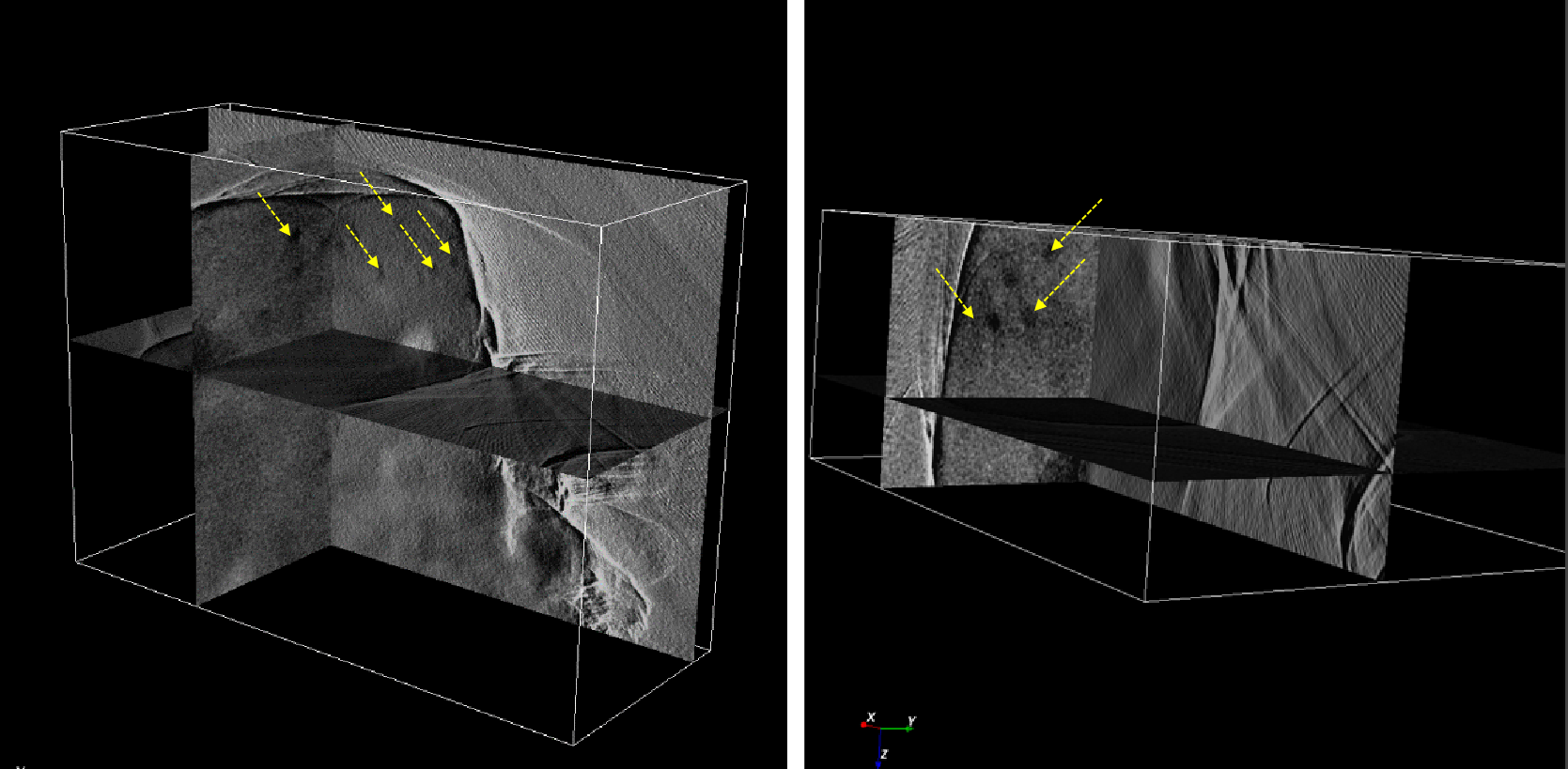
The developed Ni@Zeo catalyst, Ni nanoparticles are inside the zeolite crystal
- TEM Photograph
EDS maps
 Three-dimensional transmission electron microscopy - reconstruction model
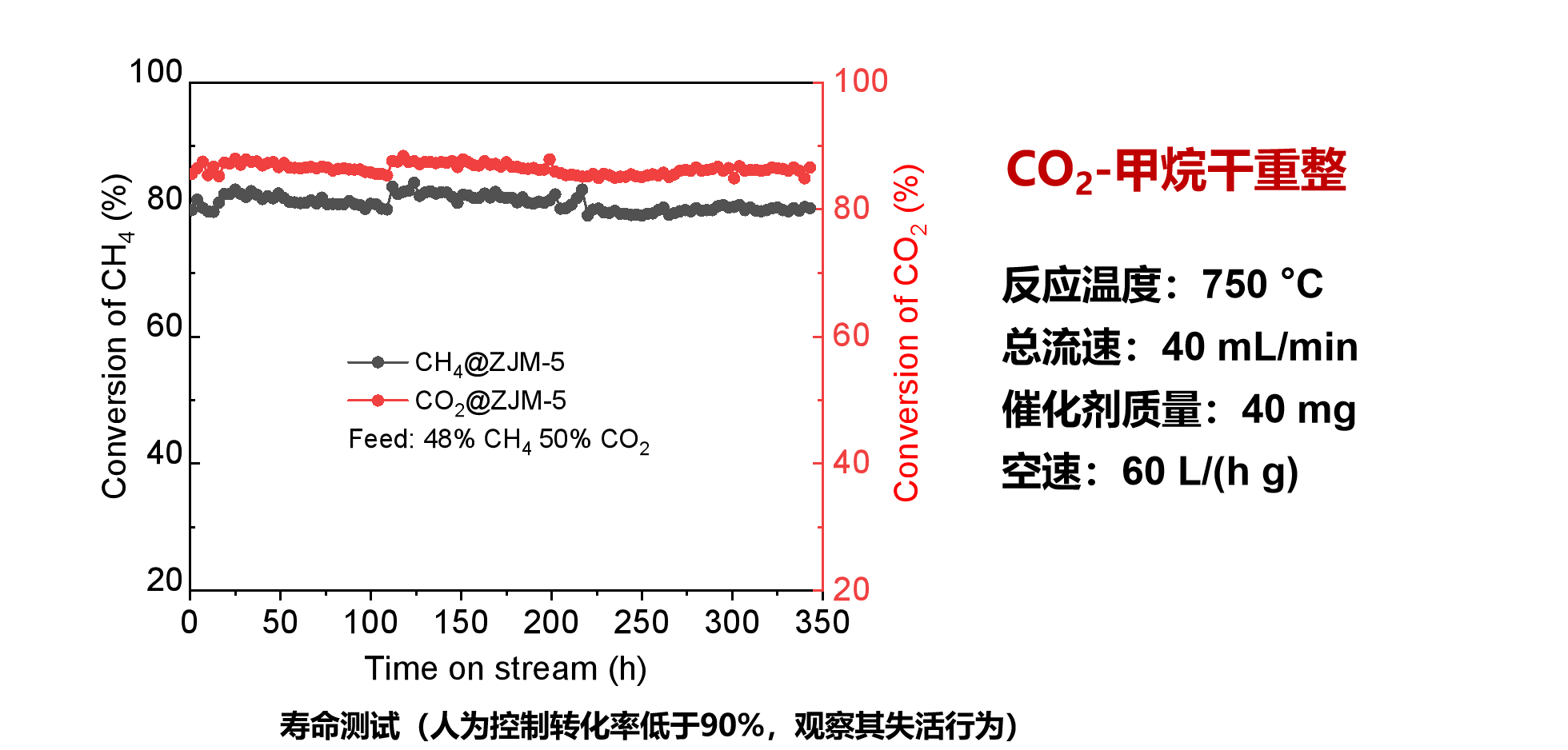
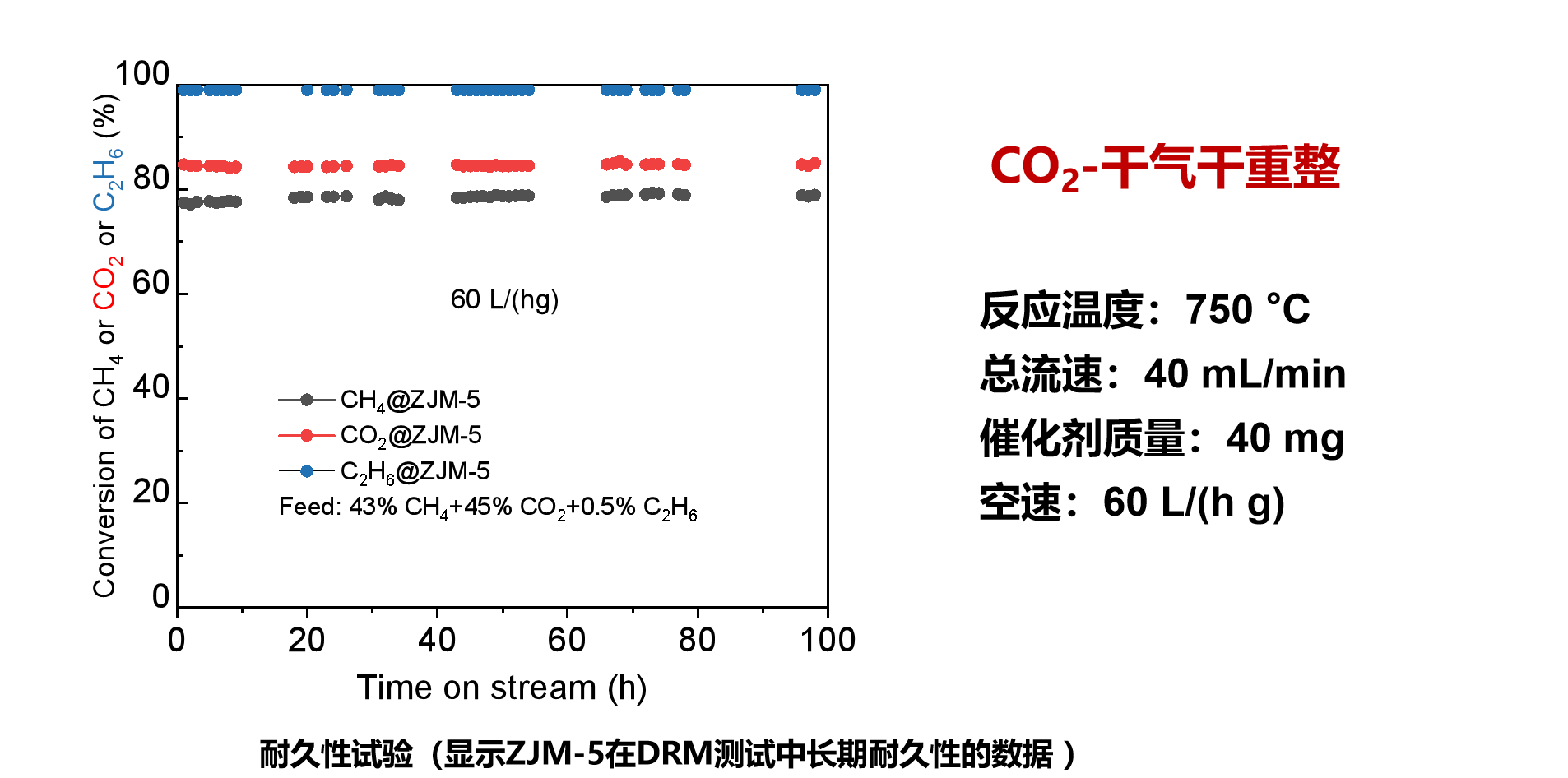
 Catalyst Lifetime Evaluation
- 催化寿命评价
Other related

undefined
Contact Us
-
Address: Building 17, Dongjianghui, Shengyuan, High tech Zone, Ningbo City, Zhejiang Province
Postcode: 315100
E-mail: chuangxinzhongxin@zjdjgpt.com
Telephone: +86-574-86661203
Zhejiang Innovation Center
of Green Petrochemical Technology
All rights reserved © 2024 Zhejiang Dongjiang Green Petrochemical Technology Innovation Centre Co., Ltd.
SEO | Powered by www.300.cn